Geisha pearl RX-7 night reel: Blender blockout → Seedance 2.5 → 4K
A 15 s gyaru × pearl RX-7 reel cut to 170 BPM: a clay Blender blockout sets 19 shots, the pop-up headlights flip up on the drop, After Effects takes it to 4K.
Made with: seedance-2-5, gpt-image-2.5-sunburst, Mira for Blender, Mira MCP, Blender, Mira for Adobe, After Effects, Claude

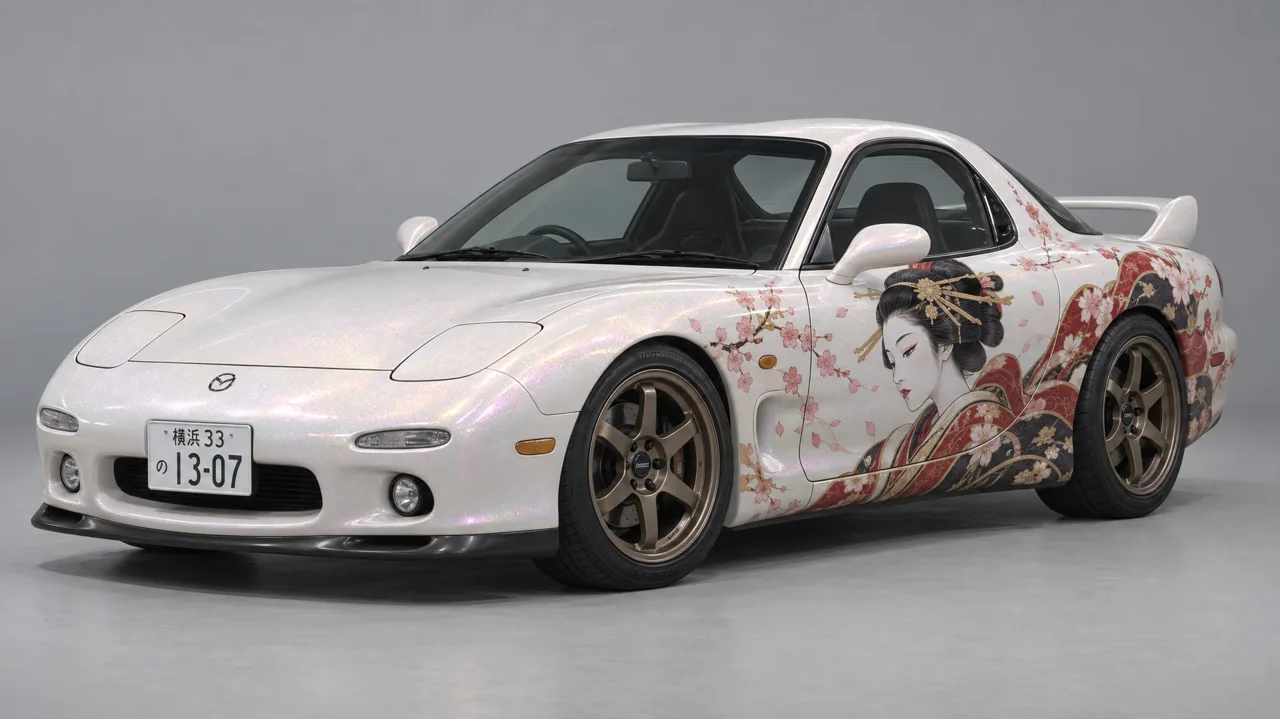
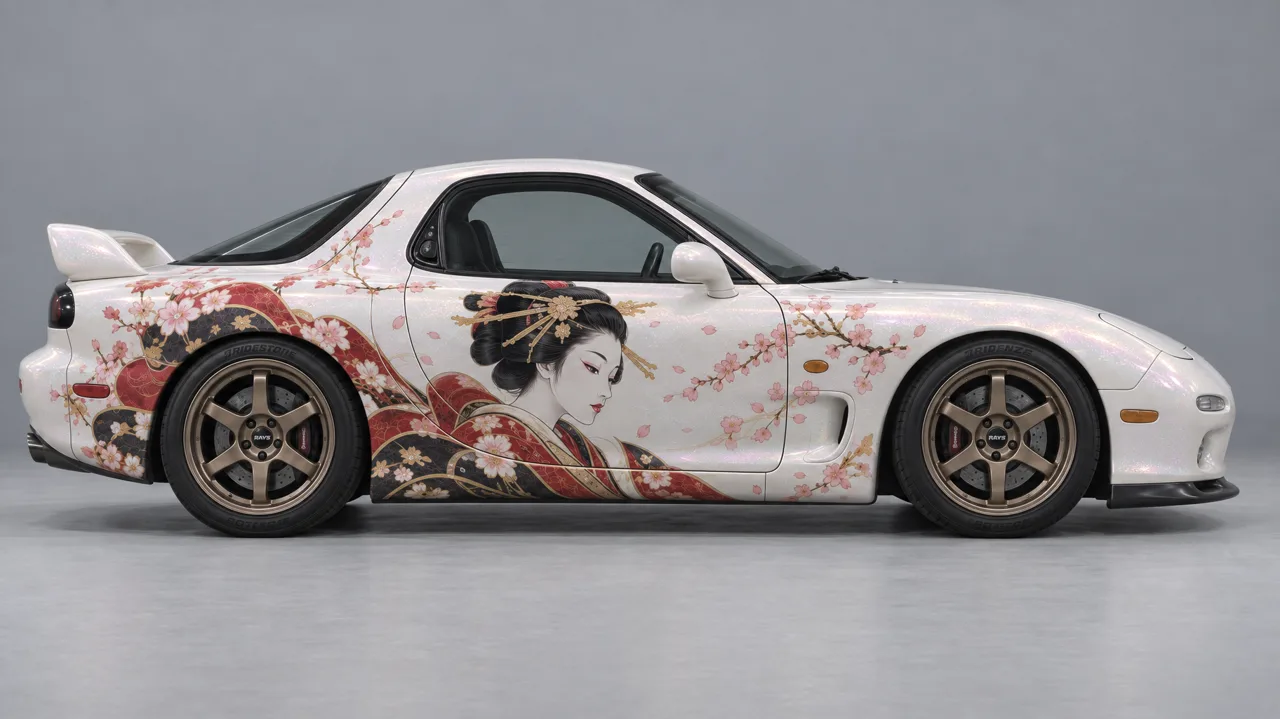
This reel started from three videos: one for the music, one for the editing style (a gyaru teaser full of fisheye close-ups and fast cuts), and the vibe of my earlier Pearl Samurai R34 reel. The car was new: a pearl Mazda RX-7 FD3S with a geisha livery, and the brief asked for one thing above all: the pop-up headlights. I directed; Claude did the hands-on work in Blender, in Mira and in After Effects through the Mira MCP.
1. Measure the track and save the drop for the hero
The 15 s excerpt runs at 170 BPM (one beat = 0.3535 s). It builds for ten seconds, drops out between 10.25 and 11.5 s and hits the drop at 11.52 s. The whole reel is planned around that one moment.
- Cut every two beats
Most shots are 0.71 s: fast like the editing reference, but each shot still reads.
- Hold still in the break
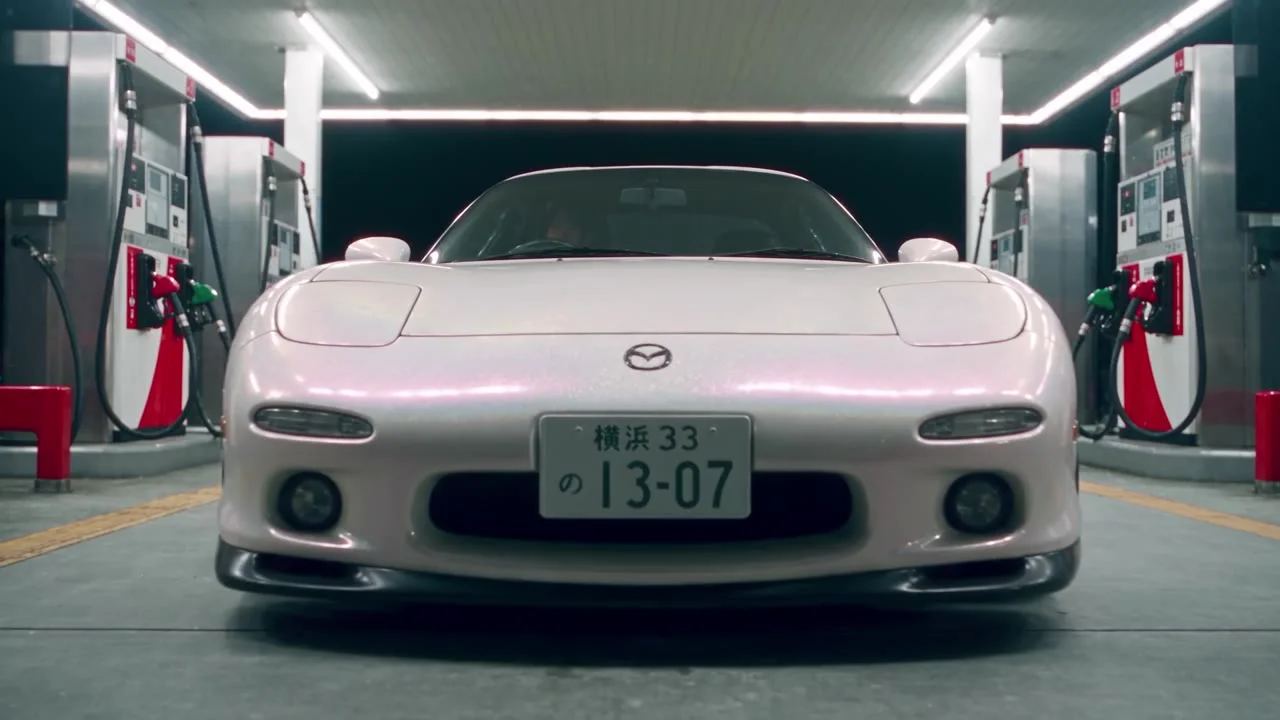
The longest shot (1.4 s) sits in the break: a slow push toward the nose under a gas-station canopy, the headlights still shut.
- The drop belongs to the headlights
On 11.52 s both pop-ups flip up and blaze on, then flash high beam, then the car launches.
- One table, three uses
19 shots with time, place, camera and action. The same table becomes the Blender markers and the Shot lines of the prompt.
2. Design the car as stills, including the hero state
A video model copies a car far better from clean studio references. The master was a front three-quarter with the headlights closed; three more views were made from it as edits so the paint and the livery stay identical. The key one is the same car with both pop-ups raised and on: the model needs to see what the hero moment looks like.


3. The heroine: the same girl as in Pearl Samurai
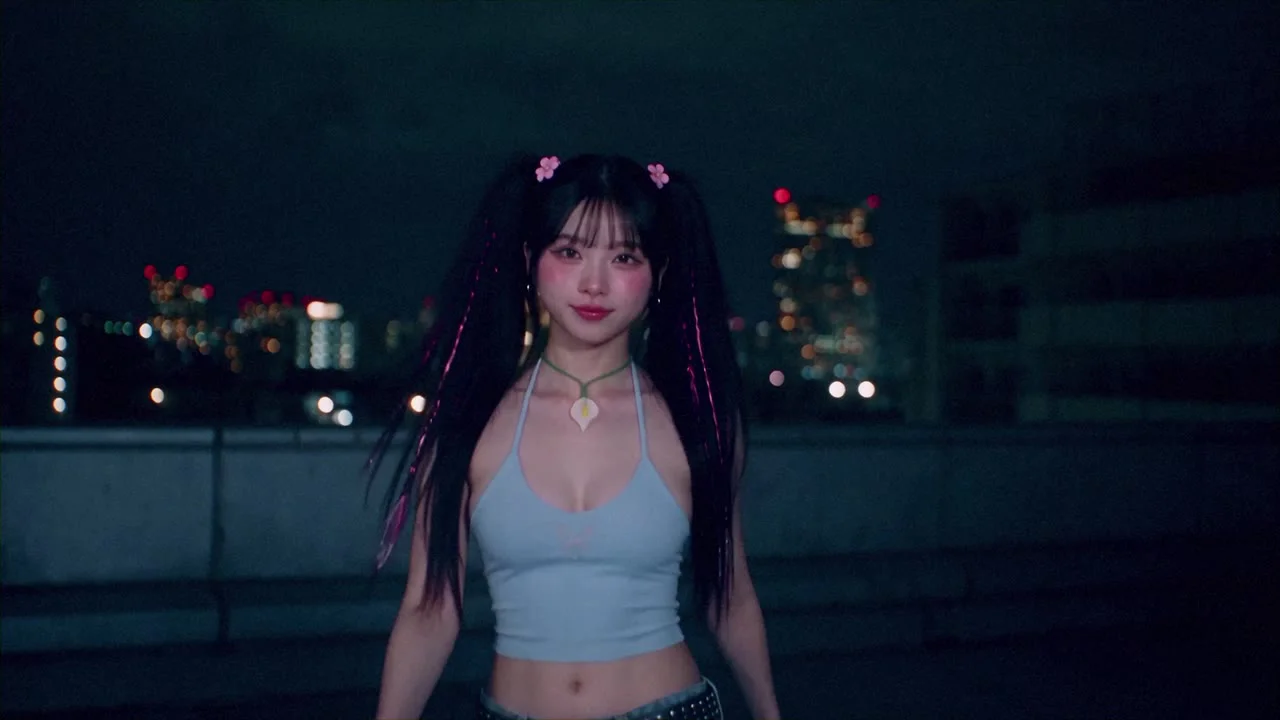
The heroine comes from the Pearl Samurai reel: an original face, not a real person, with the styling of a gyaru teaser: two high pigtails with pink braids, see-through bangs, a baby-blue halter top, baggy jeans, a calla-lily pendant. Her two full-length references plus one face close-up from that reel went in as @Image5–7, so she is recognisably the same person across both videos.
4. Block it out in Blender, in clay
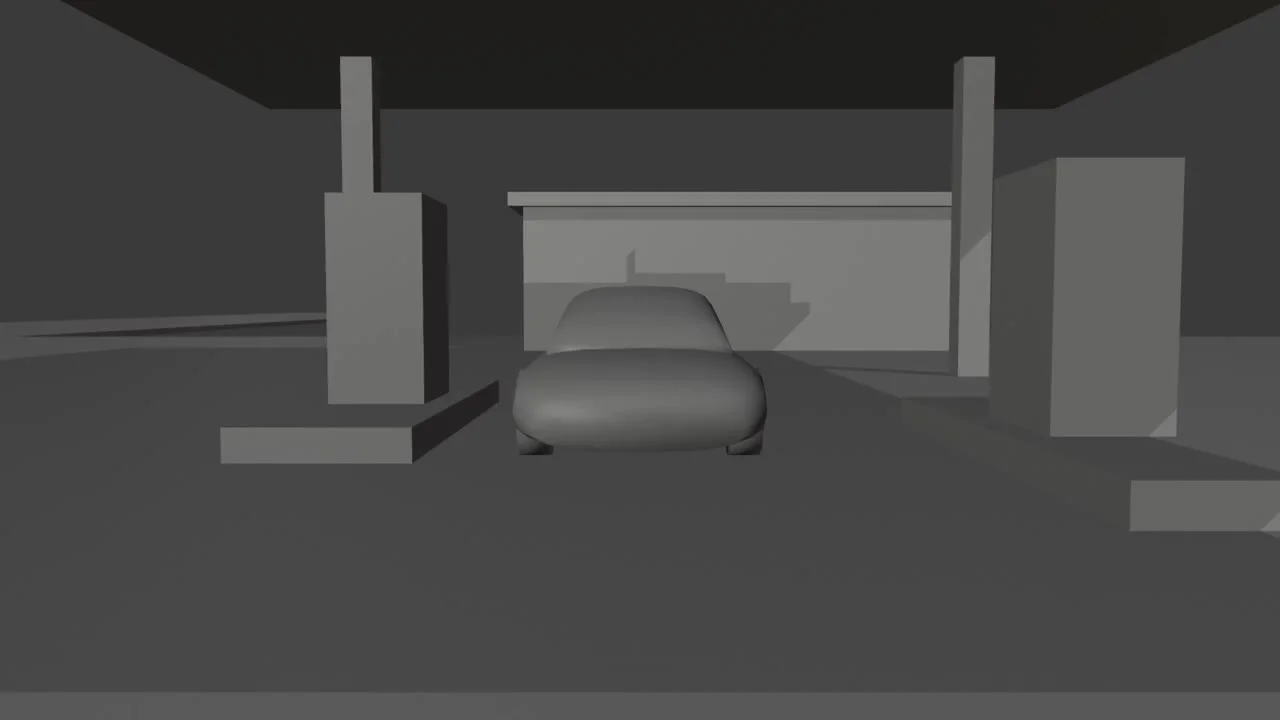
Claude built the scene in my Blender through the Mira MCP: only what sets the camera, the scale and the motion. The car at real FD3S size (4.29 × 1.76 × 1.23 m), stand-in figures, the floors, walls and barriers the camera sees. No people, no pumps signage, no props.
- A silhouette that reads as an FD
The generic car box looks like a sedan, so the RX-7 got its own lofted body: a low round nose, a double-bubble cabin, a short tail.
- Four sets, 300 m apart
A rooftop car park, an elevated expressway, an all-night gas station under a canopy, a crane-game arcade aisle. Cameras see 180 m, so no set shows on another's horizon.
- A camera per shot, cut by markers
20 cameras, each bound to a timeline marker on the beat grid, so one playblast carries every cut. Chase, wheel, drone and cabin cameras are parented to the moving car.
- Cabin shots need an open cabin
The highway car has a roof slab, pillars and a dash but no glass, so the fisheye from the passenger seat sees her, not the inside of a box.
- Teleport stand-ins on cuts
One figure jumps between sets with constant keys exactly on the cut frames, so it never slides across the frame during a shot.



5. Write the prompt
Seedance 2.5 on Mira takes the playblast as @Video1, the four car views as @Image1–4 and the heroine as @Image5–7. The full prompt is attached to the video at the top; this is its structure:
- Bind the blockout first
@Video1 is a clay 3D blockout: follow its camera path, framing and 19 hard cuts exactly, with every cut time listed.
- Give every image a role
Which image is the closed car, which is the pop-ups up, which is her face, which her outfit, and not their studio backdrop.
- Write the state change with a time
The two pop-up headlights stay CLOSED and flush with the bonnet until 11.54 s; from 11.54 s they are UP and on.
- Name the places
Rooftop with Tokyo Tower, a wet expressway, a white-lit gas station, a pink-and-cyan arcade: materials and light only.
- One Shot line per cut
Shot 16 (11.54-12.25s): low front three-quarter close - BOTH POP-UP HEADLIGHTS FLIP UP from the bonnet and blaze on.
6. Drafts, a beat-sync re-cut, then finalize
Two 480p drafts at 54 credits each. The first had the best take but its cuts drifted about 0.75 s late, so the pop-ups rose after the drop. Re-cutting fixed it for free: one shot was removed and the walk trimmed by three frames, which pulled the headlights exactly onto 11.5 s. Then finalize rendered the same take in 1080p for 300 credits, and the same cut was applied to it.
7. Upscale, optics, grade and a clipping check in After Effects
Mira finishes at 1080p; the 4K master was made in After Effects on my own machine, through the Mira for Adobe panel.
- Upscale once
Detail-preserving Upscale ×2 (detail 35, noise reduction 15), pre-rendered to ProRes in three chunks so the grade stays fast.
- Real lens chromatic aberration
Three copies of the plate split into R, G and B, added back together with the red at 100.12% and the blue at 99.88%: fringes grow toward the corners like a real lens.
- Grade cool, not warm
Color Balance with blue-teal shadows and mids and a pink-violet lift in the highlights, Vibrance +15, a little more contrast.
- Halation only on the lights
A red Glow from 225 of 255 up, so only the lamps and the headlights bloom, not the pearl paint.
- Measure the clipping
Before: up to 2.4% of a frame clipped at the canopy lamps and the headlights. A highlight ceiling at 0.96 and a final one at 0.97 bring it to 0%, peak 242 of 255.
- Finish
Vignette and fine grain, render in chunks, then check every frame: cuts, duplicate or glitched frames and brightness jumps.

The whole recipe
- Beat grid → shot table, the drop saved for the hero moment.
- Car stills on a grey backdrop, including the transformed state.
- A clay blockout with a camera per shot and a silhouette that reads.
- One prompt: blockout binding, image roles, the state change with a time, places, Shot lines.
- 480p drafts → re-cut on the beat → finalize to 1080p.
- Upscale, lens, grade and a clipping check in After Effects.
Mira AI — Seedance 2.5 drafts and finalize, the Mira MCP for Claude, Mira for Blender and Mira for Adobe.
Pearl Samurai R34 night reel — The earlier reel with the same heroine, the same track and the same editing reference.